Government yet to fund lifesaving research for Lobular Breast Cancer despite backing from 465 MPs
Campaigners say situation is 'urgent'

This July it will be a year since the campaign group The Lobular Moonshot Project met with the then Health Secretary, Wes Streeting, to ask for £20 million for research funding into Lobular Breast Cancer. Despite support for the campaign from 465 cross party MPs, 71% of all UK MPs, the government is yet to make a commitment to the research funding desperately needed.
Invasive Lobular Breast Cancer (ILC) is the second most common breast cancer and constitutes 15% of all breast cancer diagnoses in women, but currently there is very little public awareness of it or clinical research into the disease.
Tristan Loraine now heads the campaign group Lobular Moonshot Project (LMSP), after the organisation’s founder Dr Susan Michaelis, wife of Mr Loraine, died from the disease last year. Dr Michaelis was originally diagnosed in 2013 and received treatment, however Mr Loraine said: “Then in 2021 it spread to her spine and we thought hang on a minute, how’s that possible, for eight years you’ve been on a breast cancer treatment, so how does the disease spread, that doesn’t make any sense.”
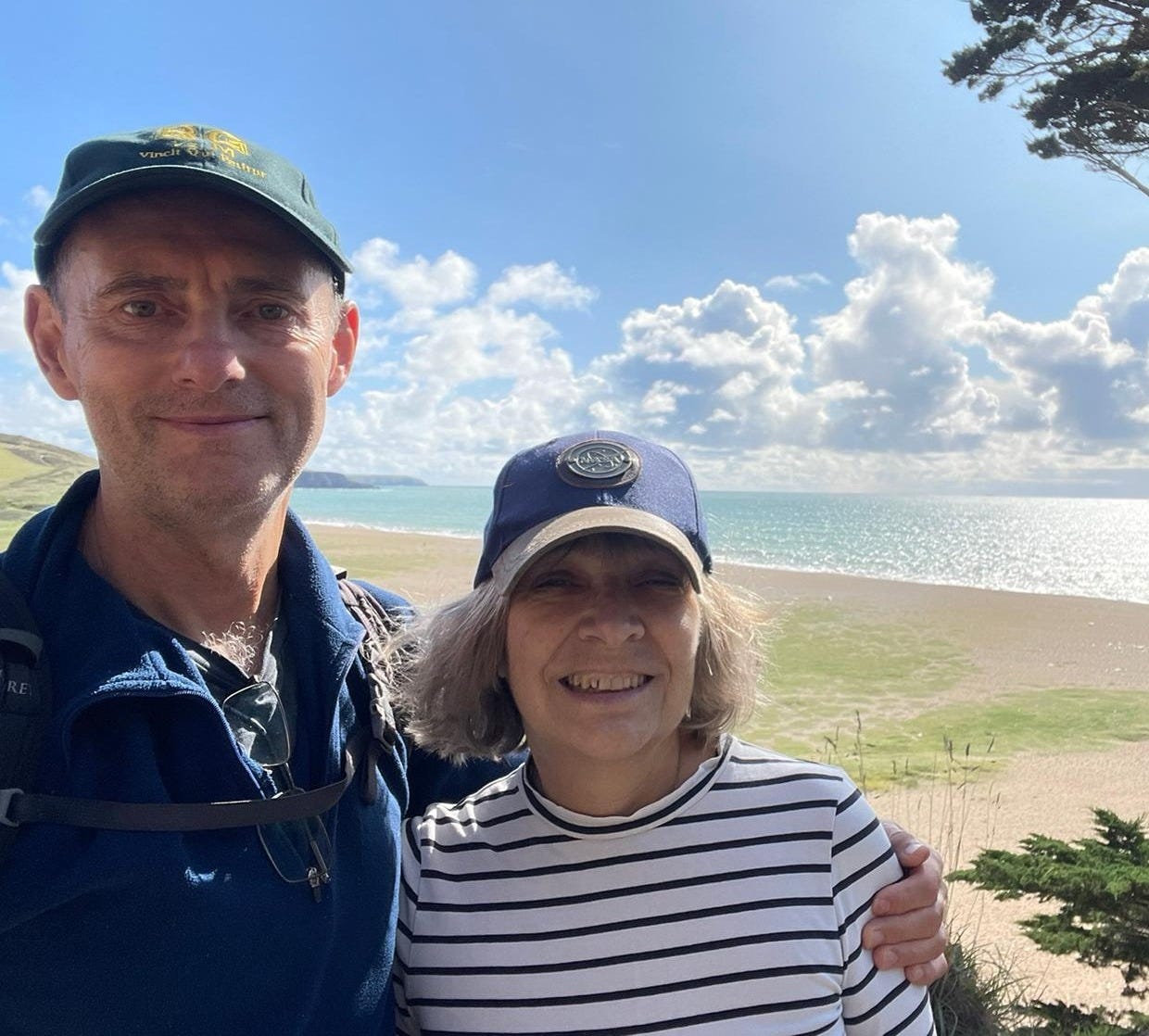
The couple were then informed that the treatment Dr Michaelis was on, wasn’t specific for the type of breast cancer she had. After researching the illness, they discovered the woeful lack of research and that many clinicians were aware that it is classed as an ‘unmet clinical need’ despite 22 women being diagnosed with it every day in the UK.
In May 2023, the couple launched LMSP. Mr Loraine said: “We need to go beyond just educating, we need to change this.” The Moonshot approach means that a multidisciplinary clinical team would aim to investigate all aspects of the disease over a 5-year period.
The disease behaves very differently than the more commonly known ductal breast cancer, which often presents as an external lump. Lobular cancer rarely forms a lump and often goes undetected on mammograms and ultrasounds. Despite this, generic ductal breast cancer testing and treatment pathways are still given to patients with ILC.
Mandy Vere from Liverpool was diagnosed with Lobular cancer in 2023 and was one of 66 women who took part in a silent vigil in London on the 22 April this year. Twenty two women stood in silence at the vigil for 22 minutes at three different locations - Downing Street, The Department of Science and Industry and The Department of Health, representing the 22 women diagnosed daily.
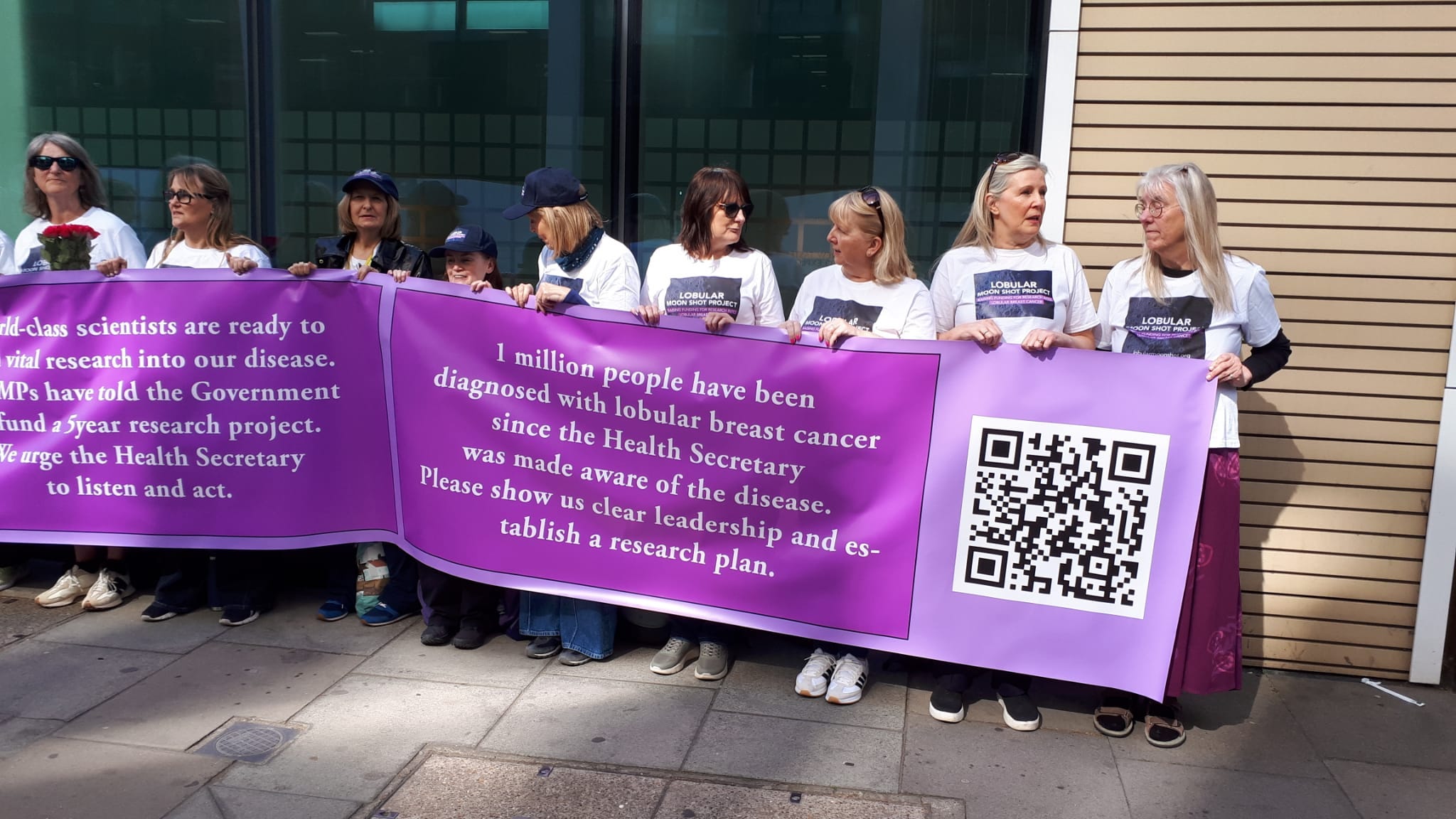
Ms Vere said: “It was very moving to stand in silence…we all went from our three different locations, we joined together and we all sang You’ll Never Walk Alone which obviously for a Liverpudlian is very, very moving.”
Often ILC is missed on mammograms or ultrasounds, so it is frequently diagnosed later. However, Ms Vere was one of the luckier ones who was called back for tests after something had been detected on her routine mammogram.
Ms Vere said: “They thought it was about one centimetre, but it turned out when I actually had the surgery to remove it, it was three and a half centimetres and that’s nowhere near as big as some women I’ve heard of, but at least it was diagnosed, I was fortunate.”
Ms Vere explained that it is very typical of Lobular cancer to be found to be much bigger during surgery than in initial detection. For Ms Vere, early detection meant she didn’t need a mastectomy and instead was treated with a lumpectomy and radiotherapy.
Although Ms Vere is currently well, she expressed concerns that should the disease come back she doesn’t feel fully confident that it would be found again during a follow up mammogram test.
ILC has a higher risk of occurring later and metastasising. Ms Vere said that post breast cancer treatments are based on the same monitoring protocol for ductal cancer, meaning she will be monitored for five years: “After that I’m not going to be monitored anymore; the little we know about lobular so far, is that it can recur later, up to ten years or more and more frequently than ductal does.” She added: “We all are aware that we’re being treated on a protocol for a different disease.”
Last July, a week after Dr Michaelis death, Mr Loraine and other campaigners met with Wes Streeting and Chief Scientific Advisor, Lucy Chappell, who said they would help by trying to ‘draw down funding’; however, they didn’t commit to find the £20 million needed for the research.
Last year’s expenditure on the NHS was £242 billion. The Moonshot Project is asking for £4 million a year for five years, for ILC research. In the meantime, patients are just receiving generic breast cancer treatments. Mr Loraine said: “One of them is on a treatment that’s costing the state £4,000 a month and it’s not even designed for her disease, it’s ridiculous.”
Mr Loraine argues that in the long term properly funded research that could lead to targeted treatments would save the NHS money.
Manchester Breast Centre, who have partnered with LMSP, have had a team of clinical experts ready to go since November 2024 and are currently just waiting for the funding to start the five-year research project.
Campaigners are frustrated with the lack of movement and commitment from the government. After the vigil in April, a meeting took place with Lord Patrick Vallance, the Minister of State for Science, Research and Innovation, who has agreed that a moonshot approach is necessary and has recently been in conversation with the Medical Research Council.
However, Mr Loraine and other campaigners believe the situation is now urgent and for many women, including Dr Susan Michaelis, it’s already too late. Mr Loraine said: “The last thing I said to her was, I promise you I’m going to win…and she just took her last breath, so I have to win.”
To find out more about Lobular Breast Cancer visit the www.lobularmoonshot.org.